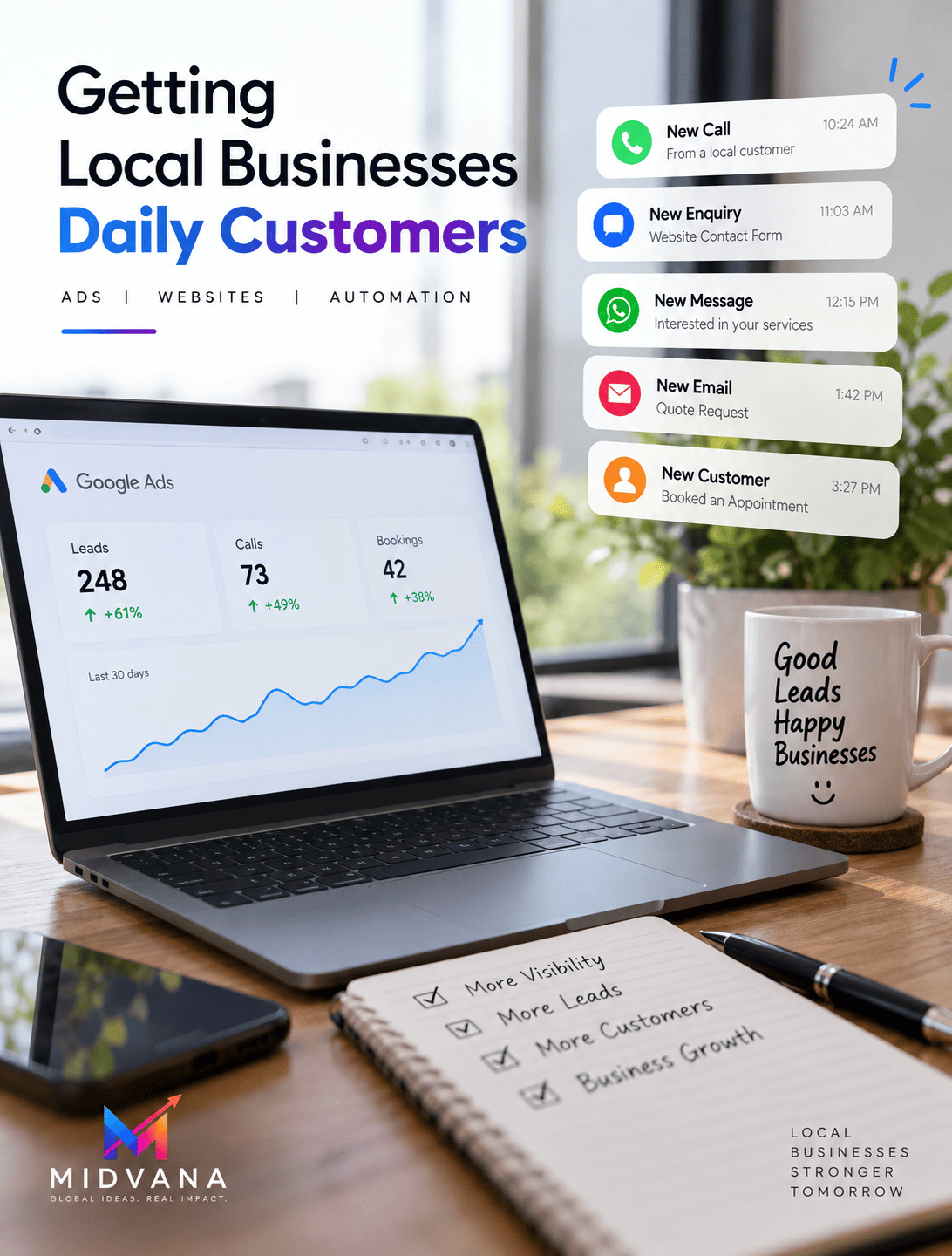


Today, customers expect businesses to be easy to find online.
Whether you’re running a salon in Auckland, a construction company in Christchurch, an accounting firm in Wellington, or a local service business in Hamilton, your potential customers are likely to search online before contacting you.
Your website is often the first place where customers learn about your business.
But having a website isn’t enough.
In 2026, businesses need a website that is professional, mobile-friendly, fast, trustworthy and designed to generate customers.
In this guide, we’ll explain why a professional website is important for New Zealand businesses and what your website should include.
1. Your Website Creates the First Impression
Imagine a potential customer searches for your business on Google.
They click your website and find:
- Outdated information
- Poor-quality images
- Difficult navigation
- Slow loading pages
- No clear contact details
- A website that doesn’t work properly on mobile
They may leave before contacting you.
Now imagine the opposite.
They find a modern website with:
- Clear services
- Professional design
- Customer reviews
- High-quality images
- Easy navigation
- Clear pricing or offers
- Simple contact options
The experience is completely different.
Your website can influence how potential customers perceive your business.
2. Customers Search Online Before Buying
Google has become an important part of the buying journey.
People search for businesses using terms such as:
“web designer Auckland”
“nail salon near me”
“builder Christchurch”
“accountant Wellington”
“digital marketing Hamilton”
“cleaning company Tauranga”
If your business doesn’t have a strong online presence, potential customers may discover competitors instead.
A professional website gives your business a place to provide detailed information and convert those visitors into enquiries.
3. Your Website Works 24/7
Unlike a physical shop or office, your website can be available to customers at any time.
A customer can visit your website:
- Before work
- During lunch
- In the evening
- On weekends
- While travelling
They can learn about your services and potentially:
- Send an enquiry
- Book an appointment
- Request a quote
- Purchase a product
- Call your business
This is particularly useful for businesses serving customers across different parts of New Zealand.
4. A Website Builds Trust
People want to know whether a business is legitimate before spending money.
Your website can provide evidence that your business is established and professional.
You can include:
Customer Reviews
Show genuine feedback from your customers.
Testimonials
Highlight experiences from previous clients.
Portfolio
Show examples of your work.
About Us
Explain who you are and what your business does.
Business Information
Provide your location, contact details and service areas.
For example, a business serving Auckland, Manukau and Papatoetoe can clearly explain those service areas on its website.
5. Your Website Helps With Google SEO
A professional website is an important foundation for search engine optimisation.
Your website can target relevant searches through:
- Service pages
- Location pages
- Blog articles
- FAQs
- Internal links
- Page titles
- Meta descriptions
- Structured content
For example, a digital marketing agency could create useful pages around:
Digital Marketing Auckland
Google Ads Auckland
SEO Auckland
Website Development Auckland
Similarly, businesses operating in other locations may create relevant pages for Wellington, Christchurch, Hamilton or Tauranga.
However, location pages should contain genuinely useful information.
Simply copying the same page and replacing “Auckland” with “Wellington” isn’t a strong SEO strategy.
6. Your Website Supports Google Ads
If you’re running Google Ads, your website becomes even more important.
Imagine someone searches:
“website developer Auckland”
They click your advertisement.
Where do they go?
If the website doesn’t clearly explain your service, the visitor may leave.
A strong landing page can include:
- Clear headline
- Service information
- Benefits
- Portfolio
- Testimonials
- Pricing or starting price
- FAQs
- Contact form
- Phone number
- Call-to-action
The advertisement gets the visitor.
The website helps convert the visitor.
7. Your Website Supports Meta Ads
The same principle applies to Facebook and Instagram advertising.
Someone may see your advertisement and become interested.
They click your ad and visit your website.
Your website then needs to answer their questions.
For example, a beauty business in Auckland might promote a new customer offer on Instagram.
When someone clicks the advertisement, the landing page could show:
- The offer
- Services
- Prices
- Photos
- Reviews
- Location
- Booking button
This creates a much clearer customer journey.
8. Mobile-Friendly Design Is Essential
Many people browse websites using smartphones.
A website that looks good on a desktop but is difficult to use on a mobile phone can lose potential customers.
Your website should work properly on:
- Smartphones
- Tablets
- Laptops
- Desktop computers
Important mobile features include:
- Easy-to-read text
- Large buttons
- Simple navigation
- Fast loading
- Click-to-call phone numbers
- Easy-to-use forms
A customer shouldn’t have to zoom in just to read your website.
9. Speed Matters
Nobody enjoys waiting for a website to load.
Slow websites can create a poor user experience and may affect your ability to convert visitors.
Website speed can be influenced by:
- Large images
- Poor hosting
- Unnecessary plugins
- Unoptimised code
- Excessive scripts
- Poor website configuration
A professional website should be built with performance in mind from the beginning.
10. Make It Easy to Contact You
One of the biggest mistakes businesses make is hiding their contact information.
Your customer shouldn’t have to search through several pages to find out how to contact you.
Use clear calls-to-action such as:
Call Now
Get a Free Quote
Book Online
Request a Callback
Contact Us
Get Started
For local businesses, your phone number, service area and business hours should be easy to find.
11. Your Website Can Help You Compete With Larger Businesses
A small business doesn’t necessarily need a huge marketing department to look professional online.
A well-designed website can help a small company present itself professionally.
For example, a small business in Tauranga can have a modern website that clearly communicates its services and customer experience.
A business in Hamilton can publish useful local content and build search visibility.
A Christchurch company can showcase its portfolio and customer testimonials.
Your website gives you a platform to communicate your value directly to potential customers.
12. Your Website Should Be Designed Around Conversions
A professional website isn’t just about colours, fonts and animations.
It should have a purpose.
Ask:
What do I want visitors to do?
Depending on your business, the answer could be:
- Call
- Book
- Buy
- Request a quote
- Submit an enquiry
- Sign up
- Visit your location
Your website structure should guide visitors toward that action.
For example:
Headline
↓
Problem / Solution
↓
Services
↓
Benefits
↓
Reviews
↓
Portfolio
↓
Offer
↓
Call to Action
This creates a clearer path from visitor to customer.
13. Add Local Information
If your business serves a particular location, make that clear.
For example:
Auckland
Mention the areas and suburbs you genuinely serve.
Wellington
Explain whether you work across Wellington City, Lower Hutt, Upper Hutt or nearby areas.
Christchurch
Clearly communicate your Christchurch service areas.
Hamilton
Explain which Hamilton areas you cover.
Tauranga
Highlight your local service area and availability.
You can also create useful location-specific content for other markets such as:
- Dunedin
- Palmerston North
- Napier
- Hastings
- Rotorua
- Nelson
- New Plymouth
- Queenstown
The key is relevance.
Don’t claim to serve a location if your business doesn’t actually operate there.
14. Your Website Can Generate Leads
A website can work as a lead-generation tool.
For example:
Google Search
↓
Your Website
↓
Service Page
↓
Contact Form
↓
Lead
↓
Sales Conversation
You can also generate leads through:
- Google Ads
- Meta Ads
- SEO
- Social media
- Email marketing
- Referral traffic
This is why website design and digital marketing should work together.
15. You Own Your Website
Social media platforms can change their algorithms, advertising rules and features.
Your website gives your business a digital property that you control.
You control:
- Your content
- Your branding
- Your service information
- Your customer journey
- Your lead forms
- Your analytics
- Your SEO strategy
Social media can send customers to your website, but your website can remain the central hub of your online presence.
What Should a Professional Business Website Include?
A modern business website should generally include:
Essential Pages
- Home
- About
- Services
- Contact
- Privacy Policy
Useful Additional Pages
- Individual service pages
- Location pages
- Portfolio
- Testimonials
- FAQs
- Blog
- Case studies
Important Features
- Mobile-friendly design
- Fast loading
- SSL security
- Contact forms
- Click-to-call
- Google Maps where relevant
- Analytics
- Search-friendly structure
- Clear calls-to-action
How Much Does a Professional Website Cost in New Zealand?
Website costs vary depending on the project.
A simple landing page can cost considerably less than a custom business website or e-commerce platform.
Factors that influence cost include:
- Number of pages
- Design complexity
- Content creation
- SEO
- Booking systems
- Payment systems
- CRM integrations
- E-commerce
- Custom functionality
- Ongoing maintenance
A professional website should be considered an investment in your customer acquisition system rather than simply an online brochure.
Website Development for New Zealand Businesses
At Midvana Intelligence, we help New Zealand businesses create websites designed around their business goals.
Our services include:
- Business Website Development
- Custom Website Design
- Landing Pages
- E-commerce Websites
- Local SEO
- Google Ads
- Meta Ads
- Lead Generation
- Digital Marketing
- AI & Automation
Whether your business operates in Auckland, Wellington, Christchurch, Hamilton, Tauranga, Dunedin or elsewhere in New Zealand, we can build an online presence that reflects your brand and helps customers take the next step.
Final Thoughts
In 2026, your website is more than a digital business card.
It can be your:
24/7 salesperson
Lead-generation system
Google search destination
Customer information centre
Booking platform
Brand showcase
A professional website can help customers discover your business, understand what you offer, trust your brand and contact you.
Whether you’re a small business in Auckland, a service provider in Wellington, a local company in Christchurch, or a growing business in Hamilton or Tauranga, investing in a strong online presence can help you compete in an increasingly digital market.
Ready to Build a Better Website?
Midvana Intelligence helps New Zealand businesses build professional websites and digital marketing systems focused on visibility, leads and customer growth.
Get in touch with Midvana Intelligence today to discuss your website project.