
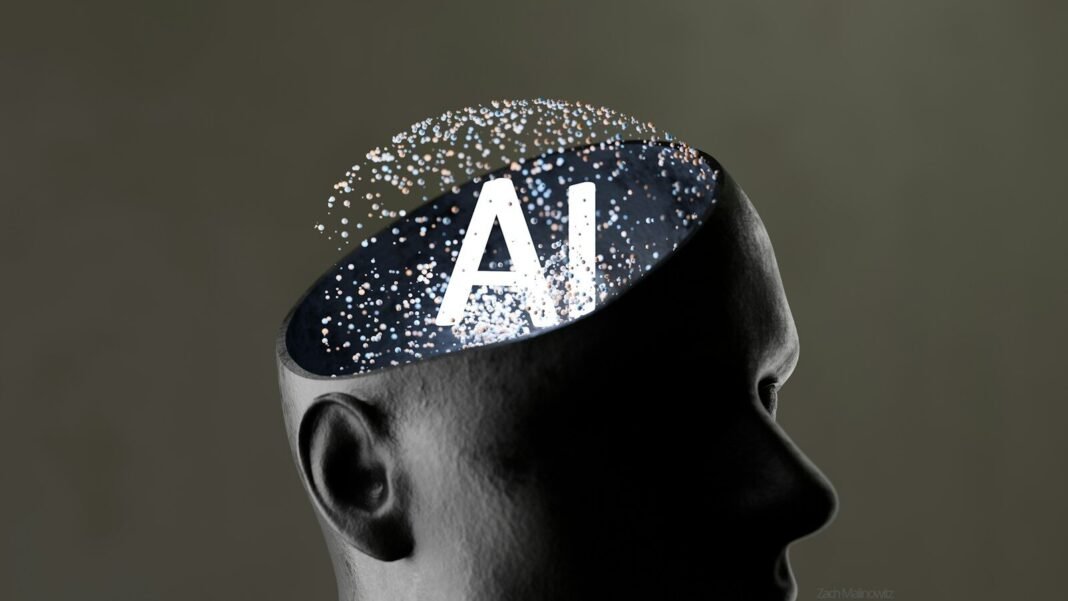
Artificial intelligence is changing the way businesses approach marketing.
From creating content and analysing customer data to improving advertising campaigns and automating repetitive tasks, AI is becoming an increasingly useful tool for businesses of all sizes.
For small and medium-sized businesses in New Zealand, AI can provide an opportunity to improve productivity, understand customers and compete more effectively online.
Whether you’re running a business in Auckland, Wellington, Christchurch, Hamilton or Tauranga, understanding how AI can support your marketing strategy can help you make better use of your time and resources.
In this guide, we’ll explore how AI is changing digital marketing and how New Zealand businesses can use it responsibly.
What Is AI Marketing?
AI marketing refers to using artificial intelligence technologies to support different marketing activities.
AI can help businesses with:
- Content creation
- Customer research
- Data analysis
- Advertising optimisation
- Personalisation
- Lead qualification
- Customer communication
- Marketing automation
- SEO research
- Reporting
AI doesn’t necessarily replace your marketing team or agency.
Instead, it can help people complete certain tasks faster and make decisions using larger amounts of information.
1. AI Can Help Businesses Create Content Faster
Creating content consistently can be difficult for a small business owner.
AI tools can assist with generating:
- Blog ideas
- Social media captions
- Email drafts
- Ad copy variations
- FAQs
- Product descriptions
- Website content outlines
- Video scripts
For example, a small business in Hamilton could use AI to generate ideas for a monthly content calendar.
A digital agency in Auckland could use AI to brainstorm topics based on common customer questions.
However, AI-generated content should still be reviewed and customised.
Your content should reflect your actual business, expertise, customers and local market.
2. AI Can Help With Customer Research
Understanding customers is one of the most important parts of marketing.
AI can help organise and analyse information such as:
- Customer questions
- Website behaviour
- Reviews
- Survey responses
- Search trends
- Sales enquiries
- Customer feedback
For example, if a business in Christchurch receives hundreds of customer enquiries, AI can help identify common questions or recurring themes.
This information can then be used to improve:
- Website content
- FAQs
- Advertising
- Sales scripts
- Customer support
3. AI Can Support Google Ads
Advertising platforms already use machine learning and automation in various parts of campaign management.
Businesses can also use AI-assisted tools to help analyse:
- Keywords
- Search terms
- Ad copy
- Audience signals
- Campaign performance
- Conversion data
For example, a business advertising in Auckland could analyse campaign data to identify which services, searches or customer segments are generating meaningful enquiries.
However, automation should be monitored.
Businesses still need to understand:
What is being advertised?
Who is being targeted?
How much is being spent?
Are the conversions actually valuable?
4. AI Can Help With SEO Research
SEO requires understanding what people are searching for and what information they need.
AI can assist with:
- Keyword brainstorming
- Topic research
- Content outlines
- Search intent analysis
- FAQ ideas
- Internal linking suggestions
- Content organisation
For example, a website development company targeting New Zealand could identify topics around:
- Website cost NZ
- Website development Auckland
- Website design Wellington
- Small business websites Christchurch
- Local SEO Hamilton
But AI-generated keywords should be validated against real search data and business relevance.
Not every keyword suggested by an AI tool will have meaningful search demand.
5. AI Can Improve Customer Support
Businesses receive many repetitive questions.
For example:
What are your opening hours?
Where are you located?
How much does this service cost?
How can I book?
Do you serve my area?
AI-powered chat systems can help answer certain frequently asked questions.
A business in Tauranga could use an AI assistant to provide basic information while allowing customers to contact a human team member when necessary.
AI support should be designed carefully so that customers can reach a person when the situation requires human assistance.
6. AI Can Help Qualify Leads
Not every enquiry is equally valuable.
A business may receive leads from people who:
- Are outside the service area
- Need a service the business doesn’t provide
- Have a very different budget
- Are looking for employment
- Want information rather than a service
AI-assisted lead qualification can help organise enquiries according to predefined criteria.
For example, a web development company could ask:
What type of website do you need?
What is your approximate budget?
When do you want to launch?
Where is your business located?
The responses can then help the sales team prioritise follow-up.
7. AI Can Automate Repetitive Marketing Tasks
Small business owners often spend hours on repetitive work.
AI and automation can help with tasks such as:
- Lead notifications
- Data organisation
- Email workflows
- Customer follow-ups
- Report generation
- Content scheduling
- CRM updates
- Internal summaries
For example:
Website enquiry
↓
Lead enters CRM
↓
Sales team receives notification
↓
Automated confirmation sent
↓
Sales representative follows up
This can reduce manual work and help businesses respond faster.
8. AI Can Help Analyse Marketing Performance
Digital marketing produces a large amount of data.
You may have information from:
- Google Ads
- Meta Ads
- Google Analytics
- Search Console
- CRM
- Website forms
- Booking systems
AI can help summarise patterns in this data.
For example, it can help answer:
Which campaigns generated the most leads?
Which services received the most enquiries?
Which locations generated customers?
Which advertisements had the strongest engagement?
Where did marketing costs increase?
The quality of the analysis depends heavily on the quality and completeness of the underlying data.
9. AI Can Help Personalise Marketing
Customers don’t always have the same needs.
A business can use customer information to create more relevant communication where appropriate.
For example, an online store may recommend products based on previous interactions.
A service business may send different information to:
- New leads
- Existing customers
- Returning customers
- Customers who haven’t purchased recently
Personalisation should always respect customer privacy and applicable laws.
10. AI Can Help Small Businesses Compete
Large businesses often have dedicated marketing departments.
Small businesses may have only one or two people managing many responsibilities.
AI can help reduce the time required for certain tasks.
A small business in Dunedin may use AI for content planning.
A business in Napier may use AI to analyse customer feedback.
A company in Auckland may use AI-assisted reporting to understand advertising performance.
The goal isn’t to automate everything.
The goal is to help a small team do more with the resources available to them.
AI Does Not Replace Good Marketing Strategy
AI is a tool.
It doesn’t automatically understand:
- Your customers
- Your brand
- Your market
- Your competitors
- Your pricing
- Your business goals
Poor strategy combined with AI can simply produce more poor marketing, faster.
Businesses should first understand:
Who are we targeting?
What problem do we solve?
Why should customers choose us?
Where do customers search?
What action should they take?
Then AI can be used to support execution.
Human Expertise Still Matters
AI-generated content can sound generic if it isn’t reviewed.
For example, an AI tool might produce a general article about digital marketing in New Zealand.
But a local business needs more specific information:
- Which customers does it serve?
- Which locations does it cover?
- What services does it actually provide?
- What makes the business different?
- What results can it demonstrate?
Human expertise adds context, accuracy and authenticity.
The strongest approach is often:
Human Strategy + AI Assistance + Real Business Data
AI and Local SEO in New Zealand
AI can also support local marketing strategies.
For example, businesses can use AI to brainstorm content topics around locations such as:
- Auckland
- Wellington
- Christchurch
- Hamilton
- Tauranga
- Dunedin
- Palmerston North
- Napier
- Rotorua
- Nelson
But location content should always be genuinely relevant.
A business shouldn’t create pages for locations where it doesn’t operate simply because an AI tool suggested those keywords.
Quality and relevance should come first.
Privacy and Responsible AI Use
Businesses should be careful about what customer information they provide to AI systems.
Before using AI with customer data, consider:
- What information is being processed?
- Is it necessary?
- Is customer consent required?
- Where is the information stored?
- Who can access it?
- What privacy obligations apply?
New Zealand businesses should consider applicable privacy requirements when implementing AI and marketing automation.
AI should make your marketing more efficient without compromising customer trust.
How New Zealand Businesses Can Start Using AI
You don’t need to implement dozens of AI systems immediately.
Start with one practical use case.
Step 1: Identify a Repetitive Task
Find something your team does repeatedly.
Step 2: Test AI Assistance
Use AI to speed up that specific task.
Step 3: Review the Output
Check accuracy, quality and relevance.
Step 4: Measure the Result
Did it save time?
Did quality improve?
Did it reduce manual work?
Step 5: Expand Gradually
Once you have a successful workflow, consider applying AI to other areas.
Examples of AI Marketing Workflows
Content Workflow
Topic Research
↓
AI Draft
↓
Human Review
↓
SEO Optimisation
↓
Publish
Lead Workflow
Website Enquiry
↓
CRM
↓
AI Lead Classification
↓
Sales Notification
↓
Human Follow-Up
Reporting Workflow
Advertising Data
↓
AI Analysis
↓
Performance Summary
↓
Marketing Decision
These workflows can help businesses reduce repetitive work while keeping humans involved where judgement is important.
The Future of Digital Marketing in New Zealand
AI is likely to continue changing how businesses create content, analyse data, advertise and communicate with customers.
Businesses that learn how to use AI effectively can potentially improve productivity and create more efficient marketing processes.
But technology alone isn’t enough.
The fundamentals remain:
Understand Your Customer
Provide Real Value
Build Trust
Create a Strong Website
Measure Results
Improve Continuously
AI can support all of these activities, but it doesn’t replace the need for a strong business strategy.
Final Thoughts
AI is changing digital marketing, but the biggest opportunity for New Zealand businesses isn’t simply using AI because it is popular.
It’s using AI where it genuinely improves the business.
From Auckland and Wellington to Christchurch, Hamilton, Tauranga and beyond, businesses can use AI to support content creation, SEO, advertising, customer communication, lead qualification, reporting and automation.
The strongest approach combines:
Human Strategy + AI + Automation + Real Customer Data
At Midvana Intelligence, we help New Zealand businesses combine digital marketing with modern technology through:
- AI & Marketing Automation
- Website Development
- SEO & Local SEO
- Google Ads
- Meta Ads
- Lead Generation
- Digital Marketing
If you’re looking to use AI to make your marketing more efficient and generate more customers, contact Midvana Intelligence today.